Introduction
Acrylic is a water-based elastomeric coating that forms a flexible, seamless barrier, protecting your roof from harsh weather conditions. Ideal for sloped and well-drained commercial and residential roofs, cool acrylic roof coating lowers air-conditioning costs by improving reflectivity. Eco-friendly and low-VOC acrylic coating requires little maintenance and can be applied easily. However, it is not suitable for wet weather conditions and is not a fix for structurally compromised roofs. Extend your roof life with fast-drying and durable acrylic protection.
Acrylic Roof Coating 101: A Guide For Homes and Business Owners
Are you facing the double crisis of uncomfortable indoor temperatures and staggeringly high energy bills? Aging dark roofs absorb maximum heat and can turn your home or retail shop into an oven. Roofs scream for mercy in scorching summers. Eco-friendly, low-VOC acrylic coatings don’t just fix leaks but UV-resistant barriers lower cooling costs and extend your roof life for years to come. If you are searching for acrylic roof coating near me, read our guide below to understand everything about acrylic coatings.
| Did you know?Reflective and cool roof coatings reduce the urban heat island effect and lower energy consumption in commercial and residential buildings and are supported by the Cool Roof Rating Council (CRRC) and the Department of Energy. |
Here is your guide to acrylic roof coatings for residential and commercial roofs.
- What is Acrylic Roof Coating?
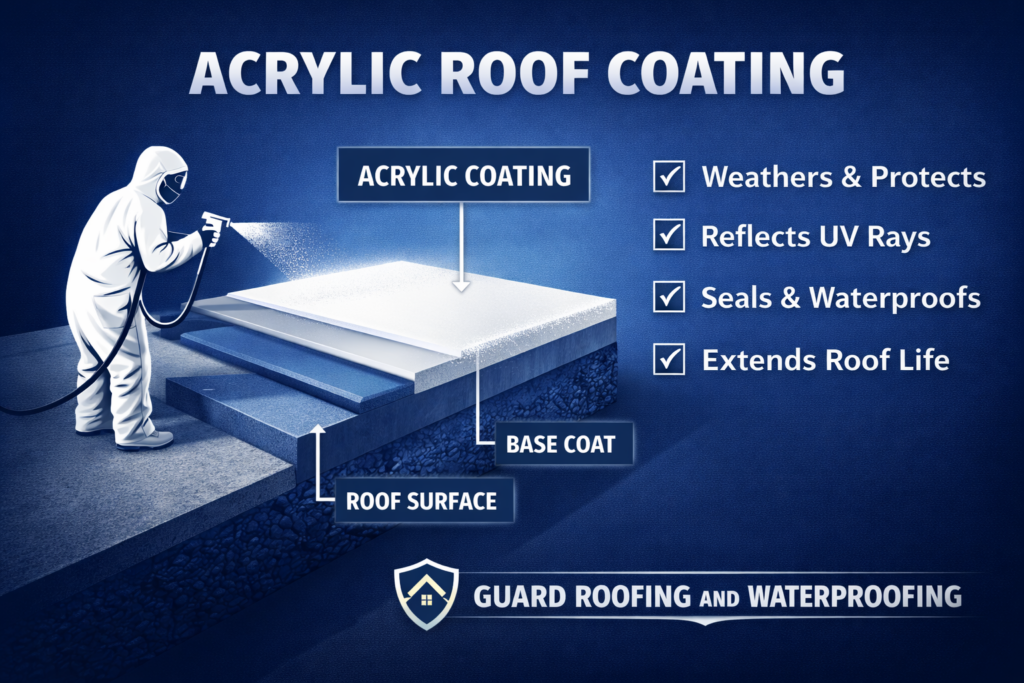
A water-based, elastomeric roofing solution, acrylic coatings can turn your hot roofs into cool surfaces, without any messy tear-off. Looking like paint, this liquid-applied system acts as a protective film against UV rays, high heat, and moisture.
| Fast FactAcrylic coatings must be applied in dry weather, when temperatures are at least 50℉ (10℃) or higher, as water-based acrylic can freeze. Ensure no rain is forecast for 24-48 hours to allow for proper curing. |
- Benefits of Acrylic Roof Coatings
Energy savings
The improved reflectivity, often earning Energy Star Ratings, reduces surface temperatures and thermal stress on the building, lowering air conditioning costs.
Seamless Waterproofing
The continuous, monolithic membrane, applied in liquid form, seals and protects the existing roof against moisture infiltration and leaks.
Flexibility and Durability
The flexible, elastomeric material expands and contracts with the building materials, resisting roof cracks and the need for frequent repairs.
Cost-Effectiveness
Acrylic is generally the most affordable option compared to other coating materials. Instead of a costly tear-off and replacement, your roof gets a new life for a lower price.
Extended Roof Life
Protective, flexible and waterproof barrier prevents damage from sun, rain and temperature fluctuations, adding years to your roof and structure.
Easy Application and Maintenance
Acrylic coating can be easily applied with a brush, roller or sprayer, and is easy to maintain, repair or recoat.
Lower Carbon Footprint
Water-based, low-VOC acrylic roof coatings are eco-friendly and are safe for the residents of the building.
- According to the US Department of Energy, cool, reflective roofs can lower energy consumption by up to 10-40%, depending on the climate and building characteristics. Roof surface temperatures can be lowered by up to 50-60℉.
- Ideal Applications for Acrylic Roof Coatings
Does your retail shop with a rusted metal roof feel like a greenhouse? Do you know that acrylic coating stays flexible even during temperature swings, allowing it to move with the roof, without cracking? Ideal applications the following.
- Sloped or Pitched Roofs that shed water quickly are ideal for acrylic.
- Commonly applied on single-ply (EPDM, TPO, PVC), built-up or metal roofs, acrylic prevents leaks and rust and provides UV protection.
- Acrylics are often used as a protective top coat over spray polyurethane foam (SPF) roofing.
- Provided there is no standing water, acrylic can be applied to Modified Bitumen and concrete.
- Ideal for residential flat roof extensions, garages or carports.
- Suits warehouses, office and industrial buildings, and retail spaces.
| Limitations of Acrylic Roof CoatingsAcrylic coating should not be applied to flat roofs with poor drainage, as it will soften, turn white and lose adhesion when exposed to standing water for more than 48 hours.Water-based acrylics are not suitable for cold climates as freezing temperatures prevent proper curing.Acrylic roof coatings are designed for restoration, not as a fix for structurally compromised roofs.Acrylic coatings can lose mil thickness over time due to weathering. |
- Acrylic vs. Silicone: Which is Better?
| Choose acrylic if | Go For Silicone if |
| You live in a dry or moderate climate.You are on a stricter budget.have a well-drained, sloped roof.Value high reflectivity.Want easy re-coating. | Your roof has ponding water issues.Your area has high humidity.Require a durable waterproofing solution.You need a long-lasting barrier. |
Conclusion
While acrylic offers superior dirt resistance, it is not suitable for wet climates. Generally considered the most cost-effective roofing solution for homes and businesses, water-based acrylic is eco-friendly and, when cured into a seamless, monolithic membrane, improves your building’s energy efficiency. Apply fast-curing acrylic coating and restore your roof.
FAQs
How long do acrylic roof coatings last?
A high-quality, properly installed and maintained acrylic roof coating can last between 10 and 20 years. However, in harsh environments, roofs may require a recoat after 5-10 years.
Can I apply acrylic coating myself?
While DIY is possible, a professional application is recommended to ensure proper thickness (mil thickness) and, therefore, a valid guarantee.
What is the best way to apply acrylic coating?
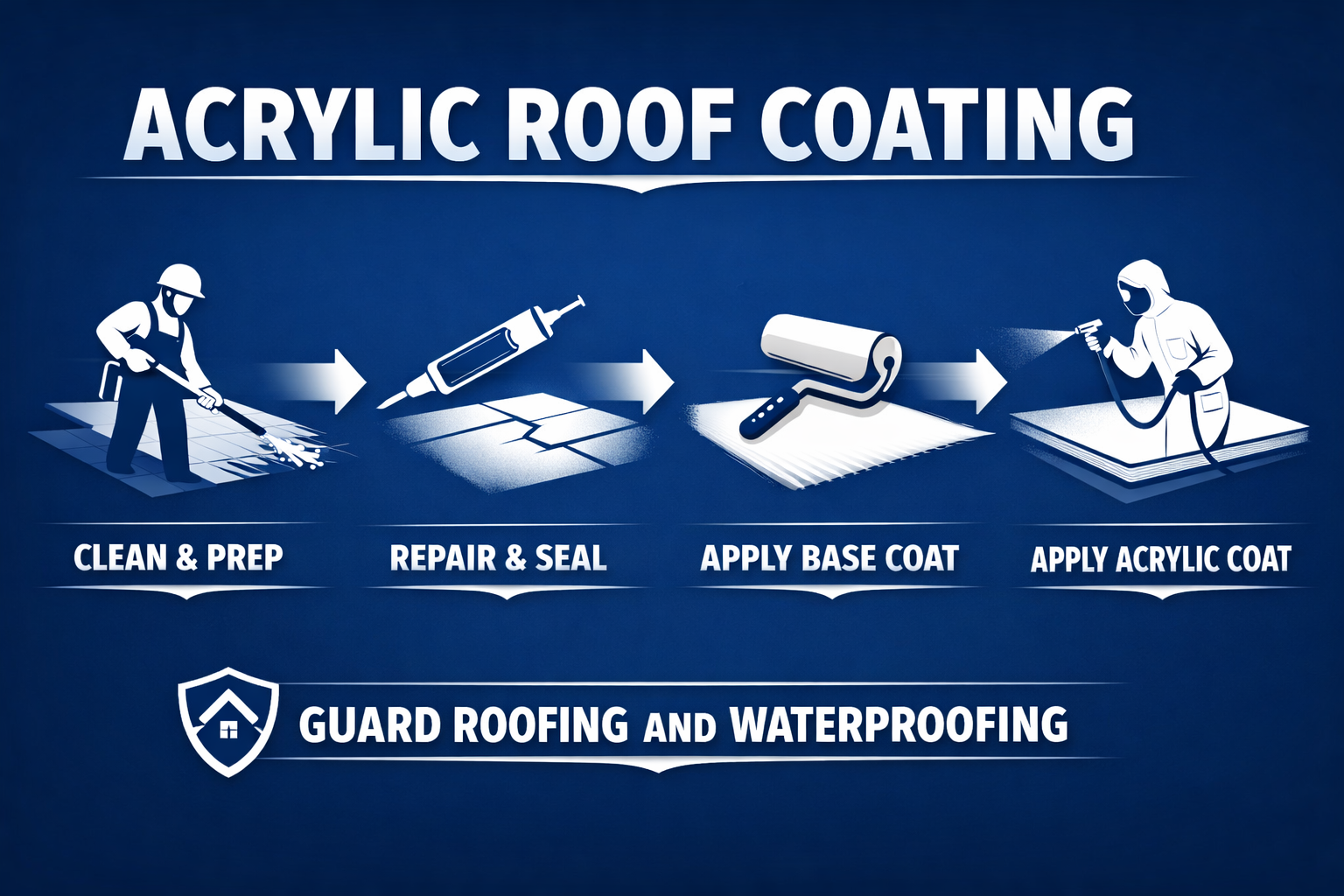
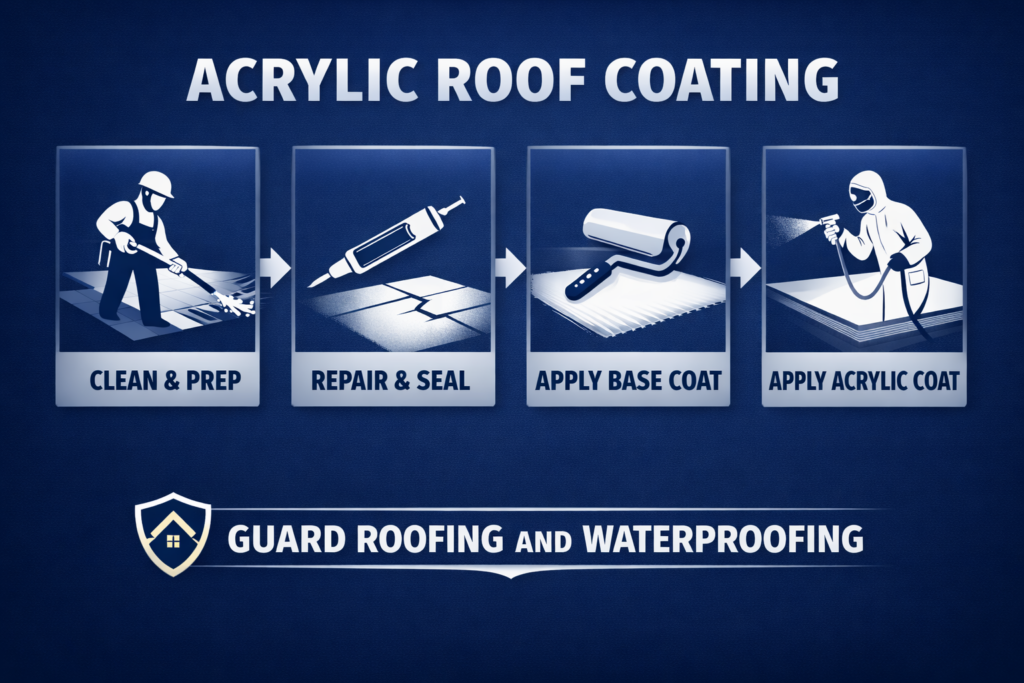
The acrylic coating is applied in two or more layers, often in a cross-hatch pattern. The first coat is applied in one direction, usually from left to right; the next is applied on top, perpendicular to it, using a roller or an airless sprayer. (Ensure even thickness, usually 15-30 mils).